
The food you eat has a direct impact on your physical, mental, and emotional well-being. According to Ayurveda, proper nutrition is not just about counting calories—it’s about eating the right foods at the right time according to your body constitution (Prakriti), digestive strength (Agni), and seasonal needs.
At Pulastya Wellness, we believe that a balanced Ayurvedic diet, combined with authentic therapies, helps improve digestion, strengthen immunity, prevent diseases, and promote long-term wellness naturally.
What is an Ayurvedic Diet?
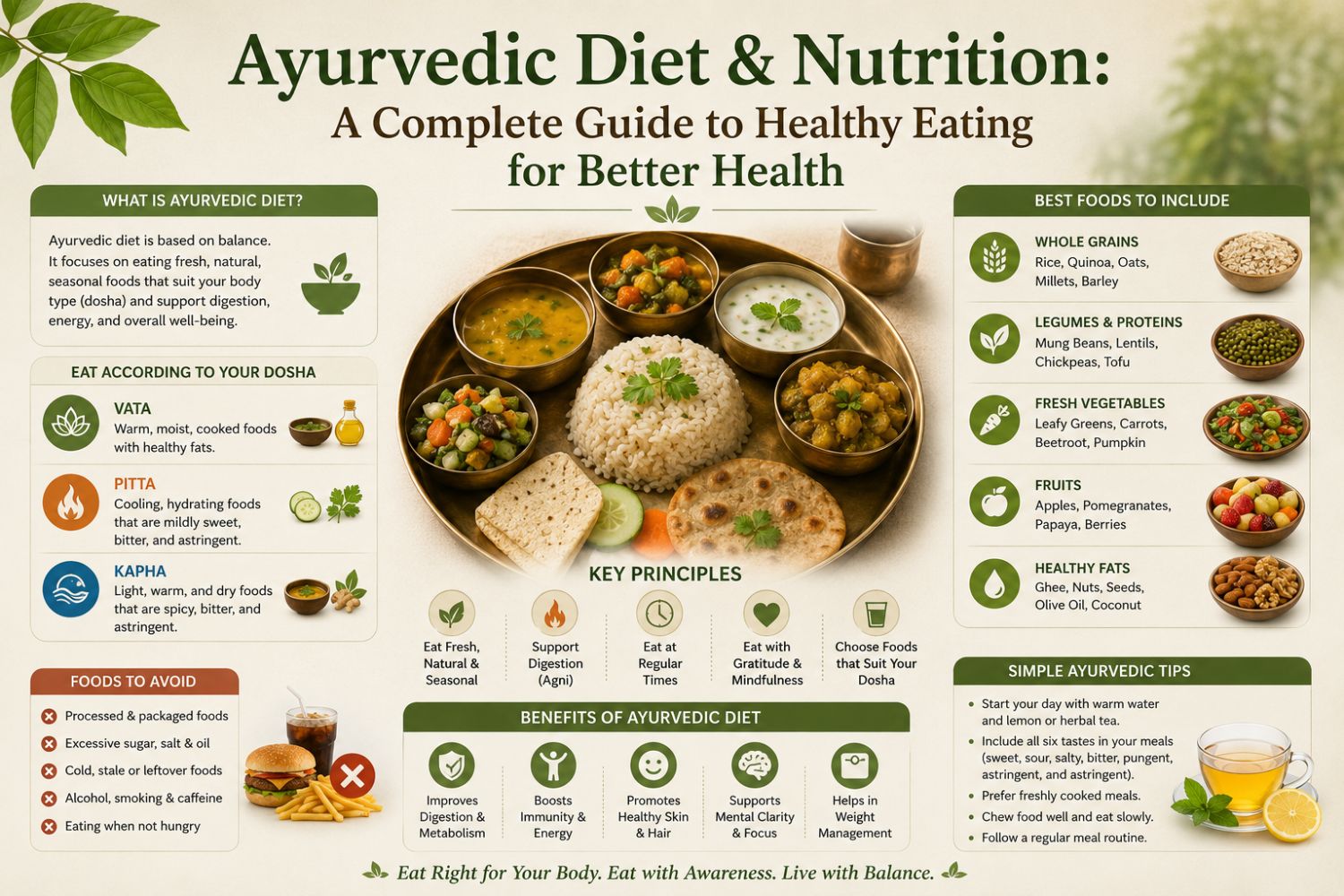
An Ayurvedic diet is a personalized way of eating that focuses on balancing the three Doshas—Vata, Pitta, and Kapha. Instead of following one diet for everyone, Ayurveda recommends foods based on your unique body type, health condition, age, and lifestyle.
The primary goal is to maintain a strong digestive fire (Agni) because good digestion is considered the foundation of good health.
Poor eating habits can weaken digestion and lead to the accumulation of Ama (toxins), which may contribute to various health concerns over time.
Principles of Ayurvedic Nutrition
Ayurveda encourages mindful eating through simple daily habits:
- Eat freshly prepared meals.
- Prefer seasonal fruits and vegetables.
- Eat only when genuinely hungry.
- Avoid overeating.
- Drink warm water throughout the day.
- Limit processed and packaged foods.
- Include healthy fats in moderation.
- Maintain regular meal timings.
- Chew food slowly and mindfully.
- Avoid eating late at night.
These practices support healthy digestion and help maintain natural energy levels.
Best Foods for a Healthy Lifestyle
A balanced Ayurvedic diet generally includes:
Whole Grains
Brown rice, millets, oats, barley, and whole wheat provide sustained energy and support healthy digestion.
Fresh Fruits
Seasonal fruits supply essential vitamins, minerals, antioxidants, and natural hydration.
Green Vegetables
Leafy vegetables are rich in fiber, iron, and nutrients that support metabolism and overall wellness.
Healthy Proteins
Lentils, beans, sprouts, paneer, and other wholesome protein sources help maintain muscle health and energy.
Healthy Fats
Moderate amounts of ghee, nuts, and seeds nourish the body and support digestion.
Herbal Spices
Turmeric, cumin, coriander, ginger, fennel, and black pepper naturally enhance digestion and metabolism.
Foods to Limit
Certain eating habits may disturb digestion and overall health.
Avoid or limit:
- Deep-fried foods
- Excess sugar
- Refined flour
- Processed snacks
- Sugary beverages
- Excessive caffeine
- Packaged foods
- Late-night meals
- Excess alcohol
- Overeating
Making gradual dietary improvements can significantly support long-term health.
Ayurveda and Digestive Health
According to Ayurveda, many health concerns begin with poor digestion.
When digestion becomes weak, toxins accumulate and may contribute to:
- Acidity
- Constipation
- Bloating
- Indigestion
- Weight gain
- Low energy
- Poor immunity
For digestive cleansing, therapies like Virechana Therapy and Udar Basti may be recommended after an Ayurvedic consultation.
Panchakarma and Nutrition
Diet plays an important role before, during, and after Panchakarma treatment.
Many patients undergoing Vamana Therapy or Virechana Therapy are advised to follow a personalized Ayurvedic diet to maximize treatment benefits and support recovery.
Supportive therapies like Abhyanga Therapy and Sarvanga Swedan may also be included as part of a comprehensive wellness program.
Diet Tips for Lifestyle Disorders
Healthy nutrition can support overall wellness in people with lifestyle-related conditions such as:
- Obesity
- High Cholesterol
- Fatty Liver
- Constipation
- Digestive Disorders
- Stress
- Poor Sleep
For individuals seeking holistic wellness, our Relaxation & Stress Relief Treatment complements healthy dietary habits and lifestyle changes.
Daily Ayurvedic Eating Routine
A simple routine can help improve digestion and energy:
Morning
- Drink warm water after waking.
- Eat a light, nourishing breakfast.
Lunch
- Make lunch your largest meal of the day.
- Include grains, vegetables, protein, and healthy fats.
Evening
- Eat a light dinner at least 2–3 hours before bedtime.
- Avoid heavy, oily, or processed foods at night.
Maintaining consistent meal timings supports digestive health.
Benefits of Following an Ayurvedic Diet
- Supports healthy digestion
- Improves metabolism naturally
- Helps maintain a healthy weight
- Strengthens immunity
- Increases daily energy levels
- Promotes better sleep
- Supports detoxification
- Enhances mental clarity
- Nourishes the body naturally
- Contributes to long-term wellness
Combine Diet with Ayurvedic Therapies
Nutrition works best when combined with personalized Ayurvedic therapies.
Depending on your health condition, your Ayurvedic doctor may recommend:
- Abhyanga Therapy for relaxation and circulation.
- Shirodhara Therapy for stress and sleep support.
- Virechana Therapy for digestive detoxification.
- Vamana Therapy for selected Kapha-related conditions.
- Explore our Complete Therapy Collection to learn more.
Why Choose Pulastya Wellness?
At Pulastya Wellness, we provide a holistic approach that combines:
- Personalized Ayurvedic Consultation
- Authentic Panchakarma Therapies
- Customized Diet Guidance
- Lifestyle Counseling
- Herbal Medicines
- Yoga & Wellness Support
- Preventive Healthcare
Every treatment plan is tailored to your individual constitution and health goals.
Conclusion
A healthy diet is one of the strongest pillars of Ayurveda. By choosing fresh, balanced foods and combining them with the right Ayurvedic therapies and healthy lifestyle practices, you can improve digestion, increase energy, strengthen immunity, and support long-term wellness naturally.
Whether your goal is better digestion, healthy weight management, or preventive healthcare, Ayurveda offers a sustainable approach to nutrition and holistic living.
Ready to begin your wellness journey?
👉 Book an Ayurvedic Consultation Today
